


|
|
|

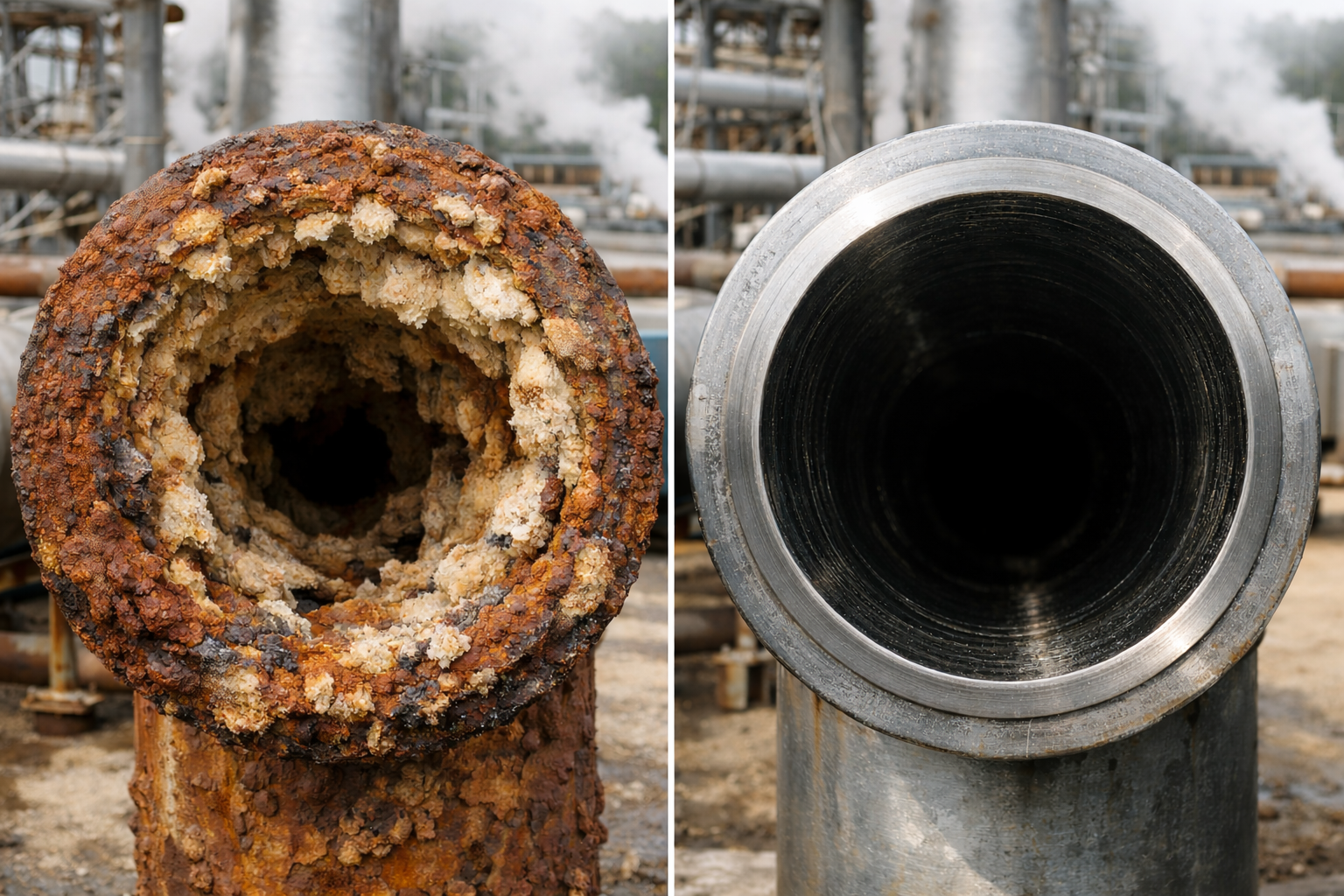
Testing the effectiveness of compounds in protecting against corrosion and scale formation in conditions of high temperatures and pressures of geothermal system
https://www.croris.hr/projekti/projekt/16436
Funding source: European Union (NextGenerationEU)
Duration: 1.10.2025 – 30.9.2029
Principal investigator: Associate Professor Gordana Bilić, Ph.D.
Budget: 27.420,85 EUR
Call for project proposals: Poziv za financiranje institucionalnih istraživačkih projekata financiran iz izvora 581 – Mehanizam za oporavak i otpornost (2025.) / Call for Funding of Institutional Research Projects Funded from Source 581 – Recovery and Resilience Facility (2025)
Project abstract
Pipelines and heat exchangers in geothermal systems are exposed to extremely high pressures, corrosive media (high-temperature geothermal water, high concentrations of acids, salts, gases, microorganisms), and minerals that can be deposited inside the pipeline and equipment. A common method of protection against corrosion and scale formation is the application of corrosion inhibitors and so-called antiscalants. Corrosion inhibitors and antiscalants used in the geothermal systems are mutually incompatible, which is why their protective effect is reduced, and compatibility tests are not conducted. In addition to the above, the tested compounds must meet the criteria of environmental acceptability. Often commercially available corrosion and scale inhibitors are not effective in conditions of high pressures and temperatures, or their effectiveness decreases significantly after a short time. This research will find and test an environmentally acceptable compound that has a dual effect (corrosion inhibitor and scale formation) or a mixture of environmentally acceptable compounds (corrosion inhibitor and antiscalant) that are compatible and test its/their effectiveness in conditions of high pressures and temperatures over a longer period. The tests will be conducted electrochemically and gravimetrically at atmospheric pressure, and in an autoclave that allows simulating high temperature and pressure conditions. Also, surface analysis of steel will be performed to determine the mechanism of action of the tested compounds in protection against corrosion and scale formation.
Project goals
- Find at least one environmentally friendly corrosion inhibitor and at least one antiscalant that, when tested individually, achieve high efficiency in protection against corrosion or scale formation.
- Determine the compatibility of the separate compounds, corrosion inhibitor and antiscalant, i.e. prove that the simultaneously present corrosion inhibitor and antiscalant in the system do not reduce each other's efficiency.
- Determine the high efficiency of the mixture of compounds (separated corrosion inhibitor and antiscalant) under conditions of high pressures and temperatures.
- Determine the duration of the protective effect of the compounds.
Team Members
Read more| Members from faculty: | |||
 |
Gordana Bilić, Assoc. Prof., Project Leader, University of Zagreb, Faculty of Mining, Geology and Petroleum Engineering, Croatia |
|
Tea Horvat, Assistant, University of Zagreb, Faculty of Mining, Geology and Petroleum Engineering, Croatia |
|
Gabrijela Ljubek, Assist. Prof., University of Zagreb, Faculty of Mining, Geology and Petroleum Engineering, Croatia |
|
Marina Samardžija, Senior Assistant, University of Zagreb, Faculty of Mining, Geology and Petroleum Engineering, Croatia |
|
Katarina Žbulj, Assist. Prof. Ph.D., University of Zagreb, Faculty of Mining, Geology and Petroleum Engineering, Croatia |
|
Vladislav Brkić, Full Prof., University of Zagreb, Faculty of Mining, Geology and Petroleum Engineering, Croatia |
|
Associate professor, Krešimir Pavlić, PhD, University of Zagreb, Faculty of Mining, Geology and Petroleum Engineering, Croatia |
|
Assistant professor, Gabrijela Ljubek, PhD, University of Zagreb, Faculty of Mining, Geology and Petroleum Engineering, Croatia |
| External collaborators: | |||
|
Tihomir Borko, INA. d.d., Croatia |
|
Ewa Knapik, Assoc. Prof., Poland, AGH University of Science and Technology, Kraków |