


|
|
|

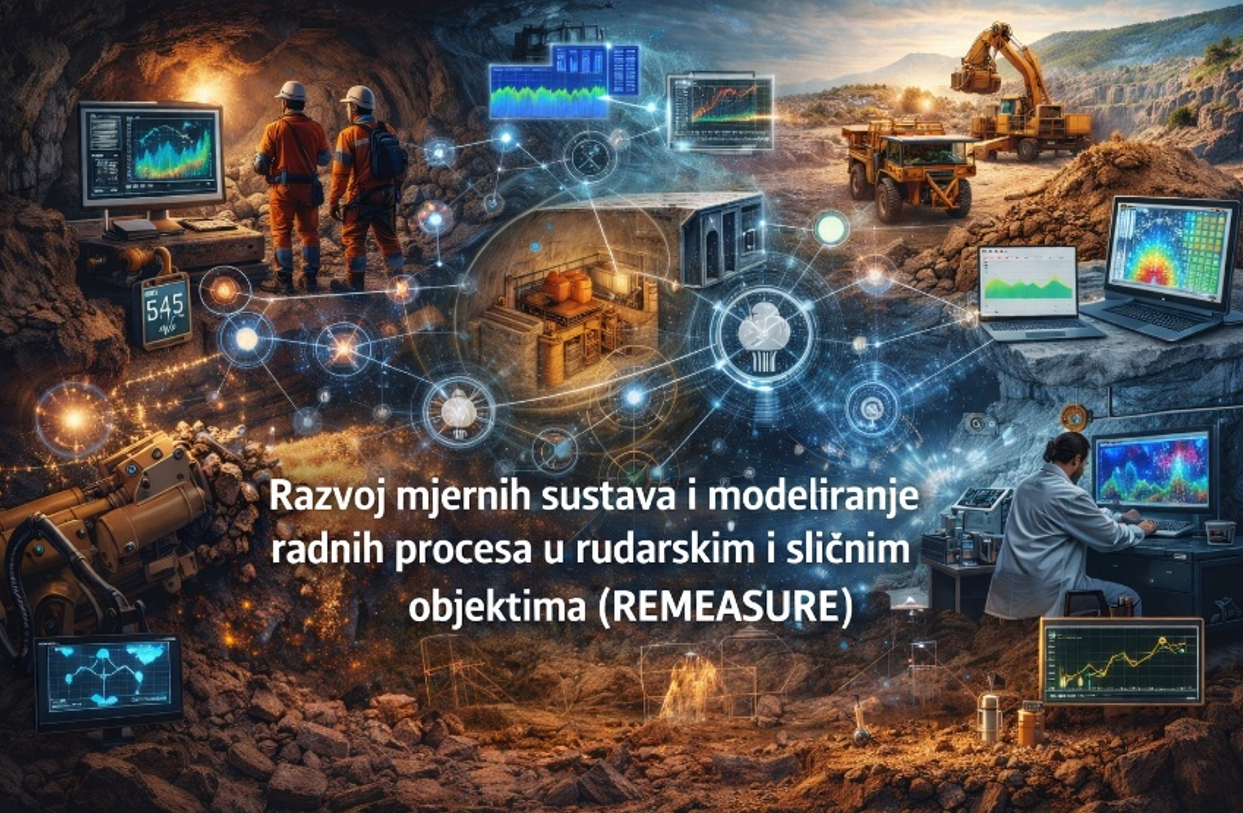
Development of Measurement Systems and Modelling of Operational Processes in Mining and Related Facilities (REMEASURE)
https://www.croris.hr/projekti/projekt/16383
Funding source: European Union (NextGenerationEU)
Duration: 1. 10. 2025. – 30.9.2029
Project Leader: Assoc. Prof. Tomislav Korman, PhD
Budget: 86.397,72 EUR
Call for project proposals: Poziv za financiranje institucionalnih istraživačkih projekata financiran iz izvora 581 – Mehanizam za oporavak i otpornost (2025.) / Call for Funding of Institutional Research Projects Funded from Source 581 – Recovery and Resilience Facility (2025)
Project summary
The REMEASURE project is focused on the development and application of advanced measurement systems and numerical modelling of key operational processes in mining and related facilities. The aim is to increase energy efficiency, safety, and long-term sustainability through interdisciplinary research in the fields of ventilation, transport, raw material extraction, and radioactive waste management. Field and laboratory research will be conducted at the underground research laboratory St. Barbara Mine, as well as at surface mines and laboratories of the Faculty of Mining, Geology and Petroleum Engineering. The project comprises several work packages, including the measurement and prediction of radon concentration, analysis of thermo-hydro-mechanical changes in radioactive waste disposal systems, optimization of ventilation systems, modelling of the behaviour of granular materials, and investigation of the tribology of cutting picks of chain cutters used in the exploitation of carbonate rocks. The project’s innovativeness is reflected in the development of integrated measurement systems, the combination of experimental and numerical methods, and the linkage of scientific knowledge with practical solutions for industry. The results will contribute to the development of smart management of mining facilities, optimization of cutting tools and processes, reduction of costs and emissions, and strengthening of scientific excellence through publications and interdisciplinary collaboration.
Project Goals:
The primary objective of the project is the development and application of advanced measurement systems and the numerical modelling of key operational processes in mining and related facilities.
With regard to the types of facilities, the project is divided into work packages within which research is conducted on operational processes in underground mines and similar facilities (PP work packages), whose activities are carried out at the underground research polygon. It is further divided into work packages involving research conducted in surface mines (VS work packages), which are implemented at surface mining sites of mining companies.
The project has the following main objectives:
- Development and validation of measurement systems for:
- Field measurement of rimpull force and transport route characteristics (VS A)
- Measurement of active radon concentration in mines (heavy-duty conditions) with remote data transmission (PP A)
- Measurement of water pressure/stress, soil temperature, and soil moisture (PP B)
- Monitoring of operational parameters of autonomous mining machines (VS B)
- Development and validation of numerical models for:
- Behaviour of granular materials using the Discrete Element Method (DEM) (VS C)
- Assessment of wear of chain cutter picks (VS D)
- Interaction between polyester strips and crushed stone aggregate (VS E)
- Numerical analysis of thermo-hydro-mechanical-chemical (THMC) processes (PP B)
- Assessment and prediction of radon concentration (PP A)
- Additional objectives:
- Improvement of the underground research polygon through expansion of the sensor network
- Long-term collection and storage of large datasets (big data)
- Publication of at least eight scientific papers (Q1–Q2 WoS/Scopus)
Strengthening interdisciplinarity and research capacities
Team members
Read more| Members from faculty: | ||||
 |
Assoc. Prof. Tomislav Korman, PhD – project manager University of Zagreb, Faculty of Mining, Geology and Petroleum Engineering, Croatia |
 |
Assoc. Prof. Želimir Veinović, PhD University of Zagreb, Faculty of Mining, Geology and Petroleum Engineering, Croatia |
|
 |
Assoc. Prof. Mario Klanfar, PhD University of Zagreb, Faculty of Mining, Geology and Petroleum Engineering, Croatia |
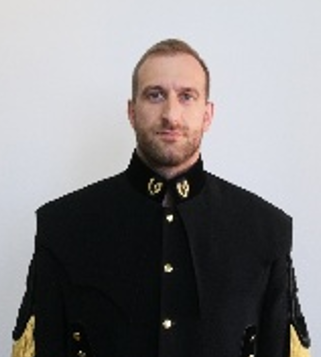 |
Vjekoslav Herceg, PhD University of Zagreb, Faculty of Mining, Geology and Petroleum Engineering, Croatia |
|
 |
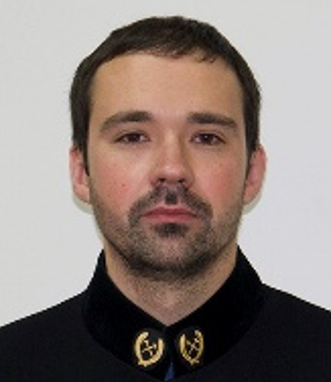
Full Prof. Dalibor Kuhinek, PhD University of Zagreb, Faculty of Mining, Geology and Petroleum Engineering, Croatia |
 |
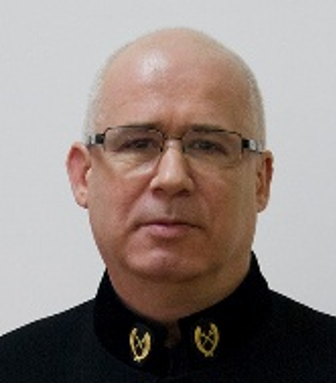
Assoc. Prof. Dubravko Domitrović, PhD University of Zagreb, Faculty of Mining, Geology and Petroleum Engineering, Croatia |
|
 |
Full Prof. Ivo Galić, PhD University of Zagreb, Faculty of Mining, Geology and Petroleum Engineering, Croatia |
 |
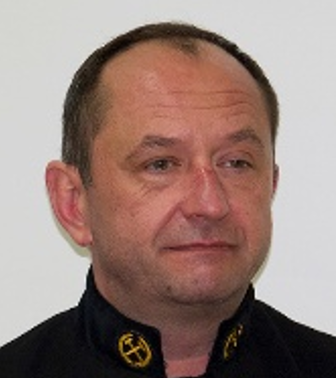
Assist. Prof. Karolina Herceg, PhD University of Zagreb, Faculty of Mining, Geology and Petroleum Engineering, Croatia |
|
 |
Full Prof. Trpimir Kujundžić, PhD University of Zagreb, Faculty of Mining, Geology and Petroleum Engineering, Croatia |
 |
Hrvoje Vukošić, University of Zagreb, Faculty of Mining, Geology and Petroleum Engineering, Croatia |
|
|
External collaborators: |
||||
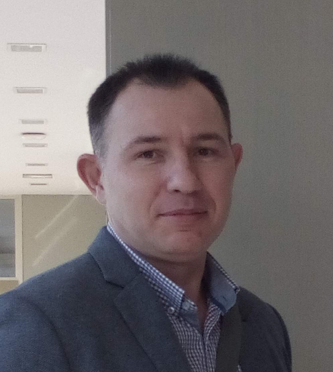 |
Full Prof.. Krunoslav Minažek, PhD Josip Juraj Strossmayer University of Osijek, Faculty of Civil Engineering and Architecture |
|||
Research Methodology
Read moreThe project is organized into two main groups of work packages:
I. Group of Work Packages at the Underground Research Polygon – St. Barbara Mine, Faculty of Mining, Geology and Petroleum Engineering (PP)
PP A – Radon and Radon Concentration Modelling
- Development of devices for measuring radon in demanding and humid conditions
- Establishment of a sensor network with IoT-based data transmission
- Validation of models (RAGENA, INDORAD, ARMAX, etc.)
- Development of long-term radon concentration prediction models
PP B – Thermo-Hydro-Mechanical-Chemical (THMC) Processes
- Development of a new measurement system for THMC effects not previously covered by existing measurements
- In-situ measurements in the container–buffer–rock system
- Determination of the behaviour of bentonite clay as a buffer material in the system “container (heater) – buffer (bentonite) – host rock”
- Numerical modelling of the long-term behaviour of the system
PP C – Ventilation and CFD Airflow Simulation
- Expansion of the sensor network for microclimatic parameters in the underground polygon
- Laboratory testing of fan characteristics, power, and efficiency with variation of blade pitch and rotor angular velocity
- CFD simulations of airflow with verification through measurements in real underground conditions
- Long-term collection of microclimatic data with storage in a database on a publicly accessible server
II. Group of VS Work Packages – Research in Surface Mines
VS A – Rolling Resistance and Transport Optimization
- Development of a measurement system for field assessment of rolling resistance based on an Arduino platform integrating a dynamometer, GPS, accelerometer, and inclinometer
- Measurement of transport route characteristics
- Analysis of transport energy efficiency
VS B – Monitoring of Excavator Operating Parameters
- Upgrade and calibration of the existing measurement system for monitoring excavator operating parameters
- Field measurements of excavator performance in quarries
- Expansion of the model for estimating material properties based on dynamic excavator operating parameters
VS C – Modelling of Granular Materials (DEM)
- Development of DEM models and simulations of angle of repose testing
- Laboratory measurements of the angle of repose
- Validation of DEM models
VS D – Wear of Cutting Picks During Chain Cutter Operation
- Laboratory determination of rock mass properties (abrasivity, mineralogical-petrographic analyses)
- Field testing of cutting pick wear in surface quarries of architectural and construction stone
- Model for estimating cutting tool wear depending on rock mass abrasivity
VS E – Interaction of Geosynthetics and Aggregate
- Development of 2D and 3D numerical models of interaction between polyester strips and crushed stone aggregate
- Laboratory pull-out testing of polyester strips and determination of physical-mechanical properties of crushed stone aggregate
Comparison of numerical and laboratory results
Dissemination
Read more